

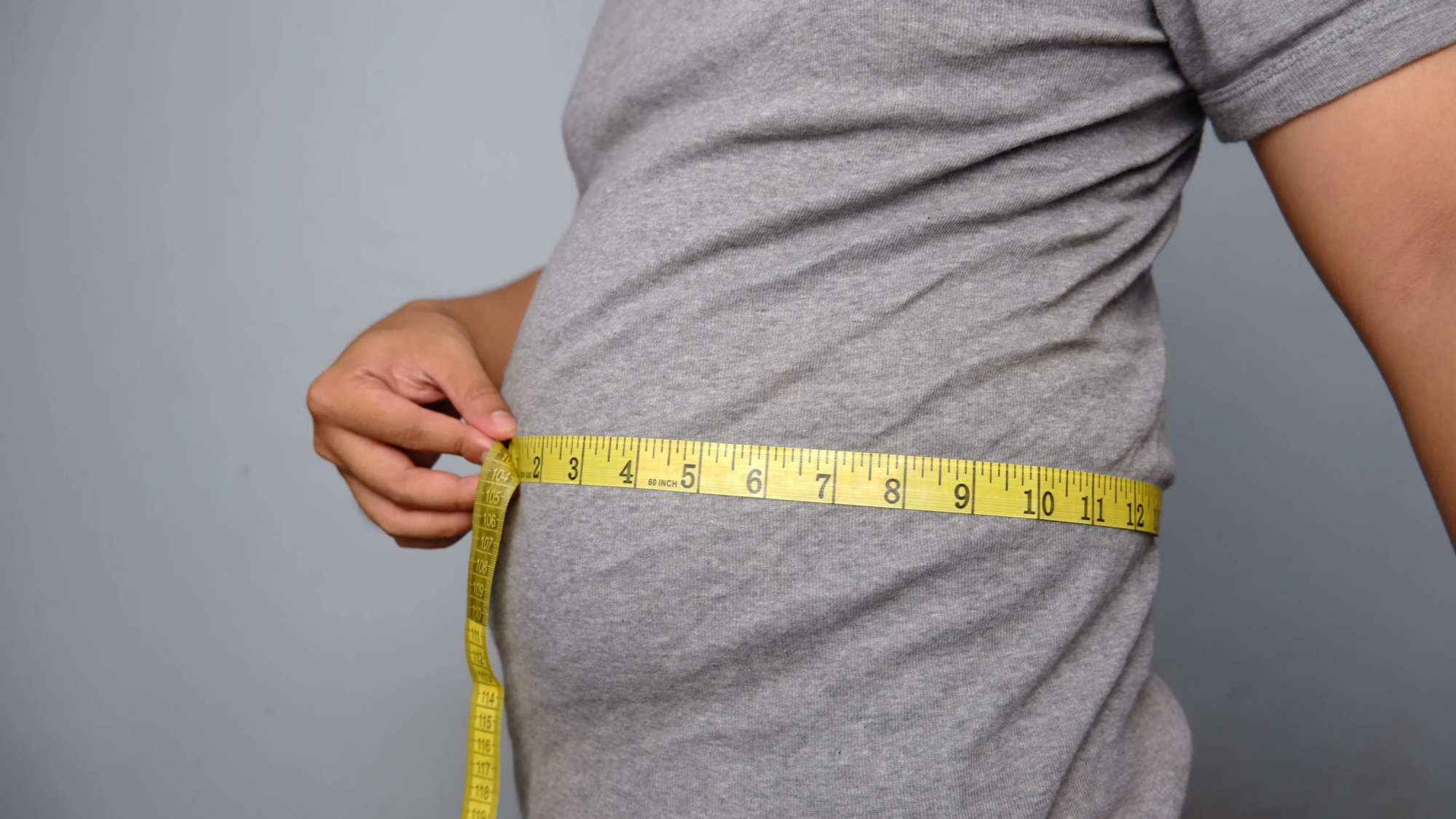
If you’ve started snoring more than you used to, your weight and fitness level might be part of the reason why — even if the change has been gradual. Carrying extra weight, especially around the neck, is one of the most well-established and modifiable causes of snoring.
The Connection Between Weight and Snoring
Snoring happens when air struggles to move freely through a narrowed airway, causing the surrounding soft tissue to vibrate. Extra fat around the neck and throat can narrow that airway further, making vibration — and snoring — more likely.
As a rough guide, a neck (collar) size of around 16.5 inches or more is associated with a higher likelihood of snoring, since there may not be enough muscle tone to keep the airway sufficiently open during sleep. A short, thicker neck is a particular risk factor.
Interestingly, this affects men and women differently. Men tend to gain weight around the neck and waist, which more directly narrows the airway. Women more commonly gain weight around the hips and thighs, and also tend to have airways that are naturally wider and less prone to collapsing — which is part of why snoring is historically less common in women than men. That difference tends to shrink after menopause, when hormonal changes lead to more neck-area weight gain and reduced muscle tone — by around age 70, snoring rates in women approach those of men.

It’s Not Just About Weight — Fitness Matters Too
Being “out of shape” isn’t only about the number on the scale. Poor muscle tone throughout the body — including the muscles that support the airway — can make it easier for the throat to collapse slightly during sleep, even in people who aren’t significantly overweight. A sedentary lifestyle, with little regular physical activity, tends to go hand-in-hand with reduced muscle tone and weaker respiratory function, both of which can contribute to snoring.
This is why simply losing weight through diet alone often isn’t enough to meaningfully reduce snoring — the body needs a combination of fat loss and improved muscle tone, which typically comes from a sensible, consistent exercise routine rather than diet changes alone.
What Can You Do About It?
The encouraging part is that this cause of snoring is one of the more addressable ones. A few starting points:
- Assess your weight honestly. Tools like a BMI calculator can offer a helpful benchmark for a healthy weight range.
- Build an exercise routine, not just a diet. Even modest, regular physical activity helps improve muscle tone in the airway and chest, alongside fat loss.
- Track your neck size, not just your overall weight. A reduction in neck circumference is often a more direct indicator of reduced snoring risk than total weight loss alone.
- Speak to a professional. A GP or dietitian can help build a realistic, sustainable plan — particularly if previous attempts at weight loss haven’t stuck.
When to Get It Checked Properly
Weight-related snoring can range from a mild nuisance to a sign of something more serious, like obstructive sleep apnea, particularly if it’s loud, frequent, and paired with gasping, choking, or noticeable pauses in breathing at night. A sleep test can help determine whether your snoring is a simple mechanical issue or something that needs a more targeted treatment plan.
The Takeaway
If your snoring has crept in alongside some weight gain or a less active lifestyle, you’re far from alone — this is one of the most common causes of snoring, and one of the most responsive to lifestyle change. Weight loss combined with regular exercise, rather than diet changes on their own, tends to offer the best results. And if snoring persists despite lifestyle changes, it’s worth having it properly assessed rather than assuming it will resolve on its own.
This article is for general informational purposes and isn’t a substitute for medical advice. A GP, dietitian, or sleep specialist can help you build a plan suited to your situation.
References
- Mayo Clinic. “Neck size one risk factor for obstructive sleep apnea.” Mayo Clinic News Network, 2026. https://newsnetwork.mayoclinic.org/discussion/mayo-clinic-q-and-a-neck-size-one-risk-factor-for-obstructive-sleep-apnea/
- Kline, C.E., et al. “The Effect of Exercise Training on Obstructive Sleep Apnea and Sleep Quality: A Randomized Controlled Trial.” Sleep, 34(12), 2011. https://doi.org/10.5665/sleep.1422
- Mayo Clinic. “Snoring – Symptoms and causes.” mayoclinic.org. https://www.mayoclinic.org/diseases-conditions/snoring/symptoms-causes/syc-20377694